
The Key Trends in the Manufacturing Industry for 2025


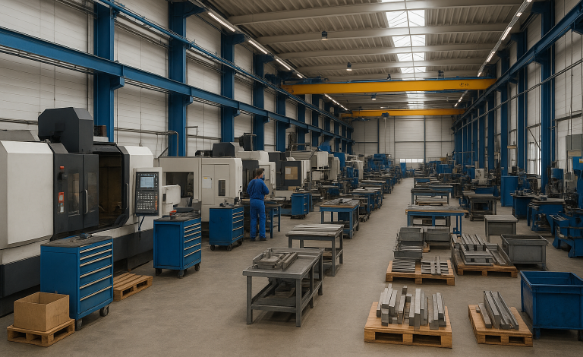
The manufacturing industry is undergoing change. Innovation and technology are playing an increasingly important role. By 2025, we see a number of key trends emerging that will not only change the way companies operate, but also how they add value to their products and services. Below, we discuss the four most prominent trends: sustainable manufacturing, smart sensors, robotization, and digital twins.
1. Sustainable Production
Sustainability is no longer a choice, but a requirement. Consumers and governments are increasingly demanding that companies reduce their environmental footprint. For the manufacturing industry, this means focusing on:
- Circular economy: Reusing materials and minimizing waste.
- Energy Efficiency: Investments in renewable energy sources and more energy-efficient machinery.
- Green certifications: Companies that can demonstrate that their processes are sustainable have a competitive advantage.
Sustainable production isn't just good for the environment—it's also good for profitability. It reduces costs in the long run and attracts environmentally conscious customers.
2. Smart Sensors
Smart sensors are essential for the digital transformation of the manufacturing industry. They provide real-time data on production processes, enabling companies to:
- Work more efficiently: Problems are detected and resolved early on.
- Perform predictive maintenance: Machines are maintained before they break down, which minimizes downtime.
- Ensuring quality: Through continuous monitoring of production conditions.
The integration of smart sensors leads to higher productivity and lower operating costs. They form the foundation for other technologies, such as robotics and the IoT.
3. Automation
Robotics remains one of the most transformative technologies in the manufacturing industry. By 2025, we expect to see a further increase in the use of:
- Collaborative robots (cobots): Robots that work alongside people, especially on repetitive and physical tasks.
- Autonomous systems: Robots that operate independently and make decisions based on data.
- Flexible production: Robots that can quickly adapt to new products and production lines.
Automation increases production capacity, improves quality, and reduces labor costs. It also enables companies to safely address labor shortages.
4. Digital Twins
A digital twin is a virtual replica of a physical product, process, or system. Using data and simulations, companies can:
- Optimizing processes: By testing different scenarios without using physical resources.
- Accelerate product development: Identify and resolve issues before products actually go into production.
- Reduce costs: Less prototyping and more efficient production.
Digital twins are becoming particularly popular due to their integration with AI and machine learning, which provide predictive insights and drive innovation.
What do these trends mean for businesses?
The manufacturing industry is on the cusp of a new era. Companies that invest in sustainable production, smart sensors, robotics, and digital twins will not only operate more efficiently but will also be better prepared for the challenges of the future.
It is essential to take action now. This includes analyzing current processes, investing in technology, and training staff to work with new systems. These trends offer opportunities for growth, innovation, and a competitive advantage.
Curious about how your company can benefit from these trends? Contact TMC Media and find out how we can help you transform your manufacturing business into a future-proof enterprise.
Relevant blogs










!.png)






































Interested in digital growth for your industry?
Strengthen your online presence and expand your market reach with TMC Media. We combine strategic thinking with innovative creativity to deliver measurable results. From conversion-focused websites to targeted online marketing campaigns—we’re your digital growth partner.
Contact us for a no-obligation consultation
