
The customer decides: one-on-one marketing


In marketing, personalization has become increasingly important in recent years. While much of traditional communication is often taken for granted, online media gives us the opportunity to thoroughly analyze our target audiences.
We know a great deal about (potential) customers and can therefore tailor our message more and more effectively to their needs, which has a proven positive impact on revenue. Moreover, customers now expect us to personalize our approach. Although the possibilities for personalization are becoming increasingly commonplace—and there is now talk of “hyper-personalization”—we see that, in practice, it is still rarely, if ever, implemented.
Personalization gives companies a competitive edge. Companies are able to turn the market upside down by delivering a hyper-personalized offering or by creating a very good personal match between a provider and the consumer, who, after all, has an increasingly short attention span. The success of companies like Uber Eats and Airbnb can therefore be attributed in large part to the degree of personalization they are able to provide.
Collecting and Storing Data
Traditional companies realize that they’ve been left behind in the area of personalization in recent years and, for that reason, want to keep up with the times. But when we look at the personalization initiatives that are actually being implemented, there are only a handful of clients with whom we’re working on one-on-one personalization using, for example, machine learning and algorithms.
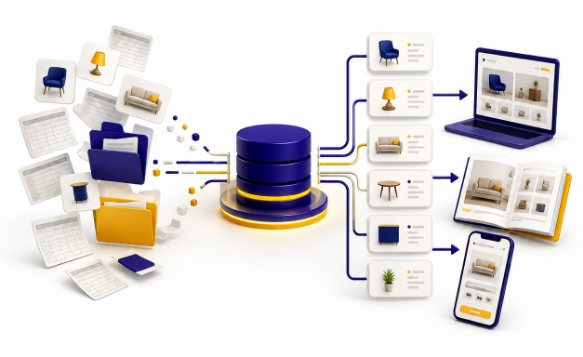
Admittedly, for many companies, that may still be too big a step, and a good first step is to centrally collect and store data from all channels and areas for improvement related to the customer. This can be done in a data warehouse, a storage system, or via a DMP (data management platform), so that a comprehensive view of the customer emerges. Having those datasets in order is the foundation. When a company has properly set up its data warehouse and cloud infrastructure, it’s already well on its way. DMPs are currently somewhat underestimated and really only become relevant for large, rapidly growing companies with a wide variety of data networks.
From Segmentation to Machine Learning
The first step is to carefully organize all the data. Marketers and CRO experts can then break that data down into separate categories. Examples include gender (male/female), where someone lives, their interests, and whether they’ve already subscribed to the newsletter.
Once that data is enriched and a complete user profile is created, even more complex components can be developed. Eventually, those components and scenarios become so specific that it becomes difficult for people to identify and analyze them based on rules. That is when the shift will take place, and that is when machine learning will come into play.
Personalization Maturity
As an “industry,” we have now reached a stage where the use of machine learning is standard practice, and we are developing many new systems based on customer preferences. For example, we predict what interests people based on their previous purchases or search queries. These predictions are then used to personalize the website and media through targeted advertising. The development of data maturity and personalization thus go hand in hand. Once that development is complete, it may be wise to start working with a DMP. This makes it possible to identify precisely defined target audiences and segments and to deliver the same personalized message to them across both devices and channels. In this process of “personalization maturity,” different teams—marketers, data scientists, and CRO experts—each have their own specific focus, but they work together toward the same goal: making the experience as engaging as possible for the consumer.
It should be emphasized that this involves the personalization of both the media and the platforms, such as the website and the app. Both are important touchpoints for many companies.
Machine learning as a commodity
Personalization cannot be viewed in isolation from developments in machine learning. We’ve now reached a stage where many machine learning tools and software—from companies such as Google, Salesforce, and Adobe—are included as standard features in their software packages. These tools can be applied to similar use cases and activated with the click of a button. In that sense, machine learning has become a mass-market product—something used by companies on a large scale—as opposed to an emerging technology that still requires significant investment. These tools are readily available in CRM and data warehouse systems and, in principle, can be used by anyone.
Are data scientists more important than ever?
The question, then, is what this means for the work of the data scientist, who is actually no longer needed in this process of sales forecasting and the like. But at the same time, companies are continuing to advance in their personalization maturity, and more “problems” are emerging that machine learning, as a commodity, cannot solve. This means that, in the long run, we will actually need more data scientists to apply machine learning to all those unique issues and challenges.
In short, growing demand is driving the automation of machine learning and making it available in major software packages, but ultimately there will be many more use cases that require a data scientist to interpret the data correctly. The evolution of the internet is unstoppable. It won’t be long before shopping malls can provide a complete picture of every step their visitors take. This will generate enormous amounts of data, which will make it possible to launch highly specific personalization initiatives. In this context, the role of the data scientist will only grow.
Baby Steps
Admittedly, this is still far from an option for many companies. A more realistic plan is to get your data sets in order. The first question an organization can ask itself is: How can I become more appealing to my target audience? And specifically, to all segments within that target audience. From there, you can gradually take more steps toward personalization. It’s a step-by-step process.
Relevant blogs











































Interested in digital growth for your industry?
Strengthen your online presence and expand your market reach with TMC Media. We combine strategic thinking with innovative creativity to deliver measurable results. From conversion-focused websites to targeted online marketing campaigns—we’re your digital growth partner.
Contact us for a no-obligation consultation
