
The Future of Search Engines: What Does That Mean for Your Content?


The digital world is changing at breakneck speed, and one of the biggest shifts is taking place in a place we visit every day: the search engine. What once began as a simple list of blue links has now evolved into a smart, contextual experience that is increasingly driven by AI, voice, and personalized interaction. The future of search engines is closer than you think, and that has direct implications for the way you produce your content.
From Keywords to Search Intent
While SEO used to revolve around the clever use of keywords for years, the focus is increasingly shifting toward understanding search intent. Google (and other search engines) don’t just want to know what you type, but more importantly, why. Are you looking for information? Do you want to buy something? Or are you looking for a solution to a specific problem?
Content that’s built solely around a keyword will face increasing challenges in the future. The winning strategy? Create content that truly provides answers. Content that’s clear, relevant, and tailored to the stage of the customer journey your visitor is in.
AI is changing the rules of the game
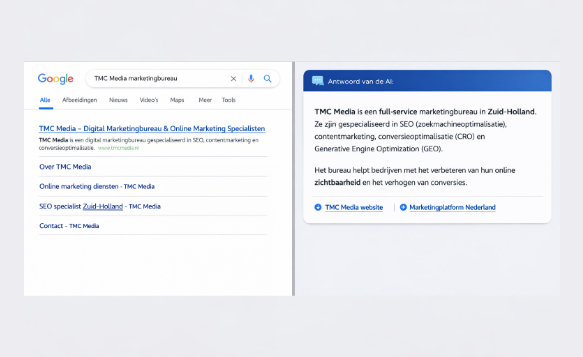
With the rise of AI tools such as Google SGE (Search Generative Experience), Bing with ChatGPT integration, and multimodal search options, search engines are becoming increasingly capable of understanding context. They generate answers, summaries, and recommendations based on multiple sources, often without requiring the user to click through to a website.
That means your content must not only stand out, but also be “usable” within these new systems. Short, clear answers. A clear structure. Content that can be easily summarized by AI. In other words: if you want your brand to remain visible in the future of search, you need to produce content that’s suitable for both machines and humans.
Voice Search and Visual Searches
Voice search continues to grow. People ask questions of their phones or smart speakers just as they would of another person. This calls for a new way of writing: conversational, natural, with answers that quickly get to the point.
In addition, we’re seeing an increase in visual searches. Users upload a photo or screenshot and are immediately shown related content. This makes it even more important to optimize images with relevant alt text and contextual descriptions.
What does this mean for your content strategy?
The future of search engines requires you to look beyond mere discoverability. It’s about comprehensibility, relevance, and applicability. That means:
- Writing for people, not just for algorithms.
- Organize content using clear headings, bullet points, and short paragraphs.
- Provide answers to specific questions that your target audience has.
- Working with content that can be processed quickly is also beneficial for AI models.
- Stay current. Search engines prioritize recent, up-to-date information.
Conclusion: Content needs to be smarter, not just better
The search engine of tomorrow is a digital assistant, not a static list. To remain visible in it, your brand must deliver tailored relevance. By creating content that addresses the need behind the search query, you increase your chances of visibility, engagement, and conversion.
The future of search engines calls for content that is clear, structured, and user-focused, but also smart enough to be picked up by AI. And that’s exactly where TMC Media can help you. Need help making your website future-proof? Contact us, and we’ll take a look at it with you—no strings attached!
Relevant blogs







































!.png)




Interested in digital growth for your industry?
Strengthen your online presence and expand your market reach with TMC Media. We combine strategic thinking with innovative creativity to deliver measurable results. From conversion-focused websites to targeted online marketing campaigns—we’re your digital growth partner.
Contact us for a no-obligation consultation
